The impact of soft seating in the workplace
Soft seating has gone from an afterthought to one of the most strategic choices in a fit-out brief. Here is why, and what it means for specification.
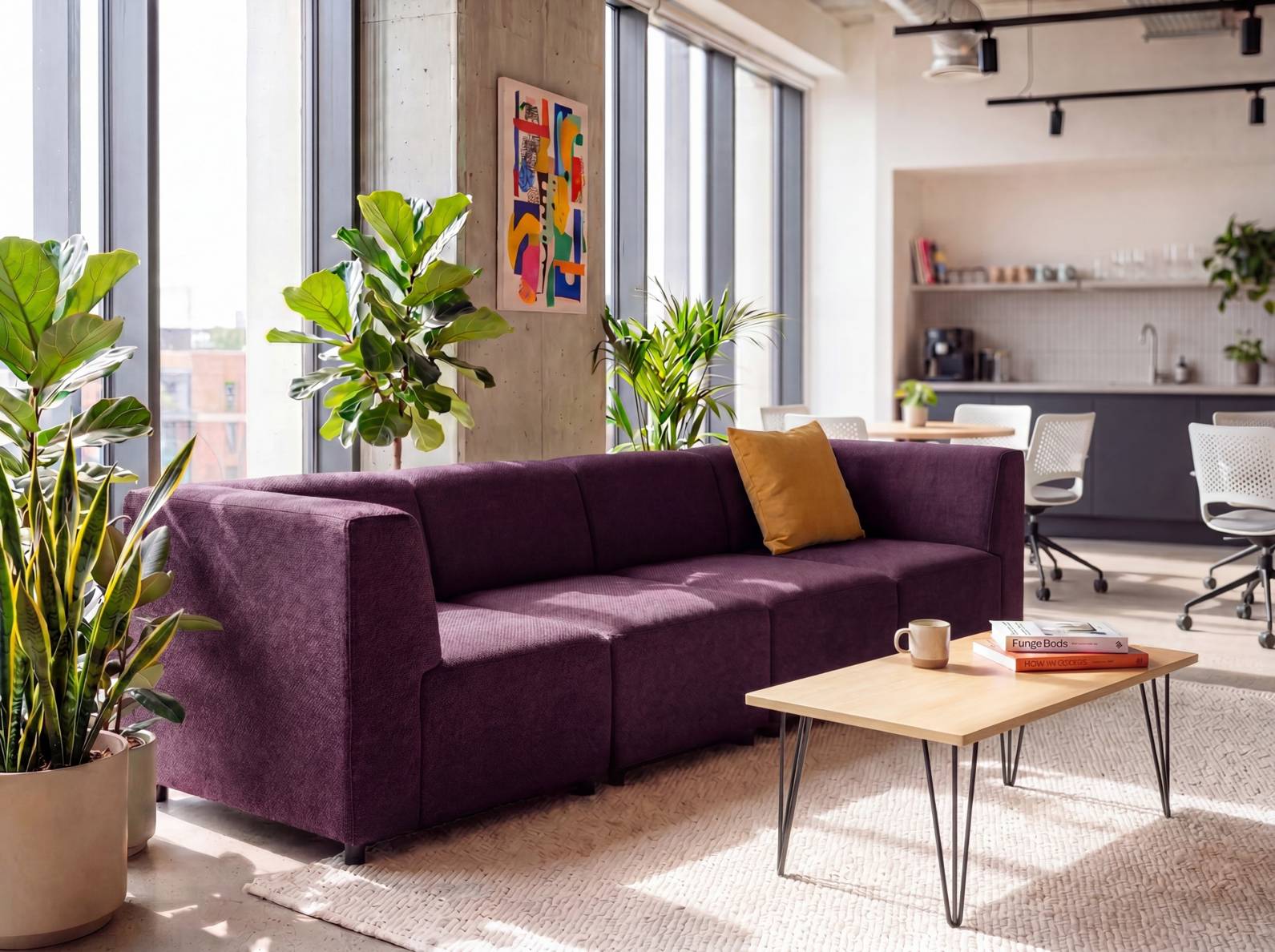
Over the past few years soft seating has gone from an afterthought — a corner with a few bean bags, the first thing cut when budgets tighten — to one of the most strategic choices in a fit-out brief.
Sofas, low lounge seating, tactile fabrics, warm lighting, planting and textiles that would not look out of place in someone's living room are appearing in office briefs at a pace that outstrips any previous design cycle. The reason is simple: employees now have a real alternative to the office — their own sofa, at home, that they already like being on.
The workday changed shape
Historically, office seating was built around one task: sitting at a desk for eight hours. The modern workday looks very different. People move between focused work, informal conversations, video calls and collaborative sessions. Soft seating gives them somewhere to shift posture, take a break properly, or have a conversation without the stiffness of a boardroom chair. That small change has a meaningful effect on comfort, stress and overall satisfaction.
What this means for specification
- Zoning conversations move earlier. Comfort-led furniture is not a finishing touch dropped into leftover space near the end of a project; it needs to be part of the initial space-planning logic, on equal footing with desking ratios and meeting room counts.
- Durability and reupholstery matter more. If soft seating is core infrastructure rather than a soft-touch extra, it has to survive daily commercial use — which means commercial-grade, residential-looking pieces rather than actual residential furniture.
- Balance still wins. The most successful interiors do not replace traditional seating; they balance it with desks and formal meeting rooms, which still have their place for focused, structured work.
The office is not becoming a home. But it does increasingly have to justify itself against one, and furniture has become the most visible way that argument gets made.
If your breakout space sits empty, the furniture is usually only half the problem. We are happy to look at the location, the acoustics and the choice of postures alongside it.